On June 6–7, 2026, the Sino-German Ocean Negative Carbon Emissions Consultation Meeting was held in Xiamen. During the meeting, the Global Ocean Negative Carbon Emissions (Global ONCE) program and the German “Cooling the planet by multi purpose ocean farming” project team reached deep consensus on open-ocean multi-purpose aquaculture, industrialization pathways, and public communication, and signed a Letter of Intent (LOI) to establish a strategic partnership.
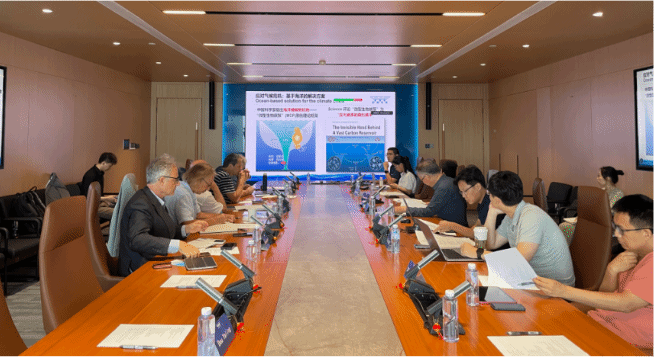
The consultation brought together research and industry expertise from China and Germany in marine carbon sinks, climate governance, engineering technology, and science communication. The Chinese side was led by Prof. Nianzhi Jiao (Chief Scientist of Global ONCE, Chair of the UN Consultative Committee on Marine Ecological Sustainable Development, CAS Academician , Chair Professor at Xiamen University) together with the ONCE research team. The German delegation was represented by Hans-Josef Fell (former German MP, President of the Energy Watch Group) , Frank Schweikert, Carl-A. Fechner, Berthold Kuhn, and Jürgen Kurz, with Viktoria Alexandratou Kerner also attending on-site. Prof. Victor Smetacek and Franziska Pausch participated online, providing academic support throughout the discussions.
The two sides conducted multidimensional, in-depth exchanges focusing on industry frontiers and pain points. The consultation was divided into two phases.
Phase I: Technical Discussions – Building Scientific Consensus on Ocean Negative Carbon Emissions
On June 6, the technical workshop focused on establishing a shared basis for integrating Chinese and German technologies and models for ocean negative carbon emissions. Chinese experts presented in detail the overall plan of Global ONCE, carbon sink enhancement approaches, talent cultivation, and science popularization achievements, with emphasis on the BCMS “four-pump integration” ocean negative carbon emissions theoretical system based on the Microbial Carbon Pump (MCP). Prof. Nianzhi Jiao delivered a summary speech on development trends and international cooperation patterns in ocean negative carbon emissions. Previously, Global ONCE established an ISO international standards working group; its first international standard proposal widely recognized and officially approved as an ISO project. The German experts recognized the scientific value of ONCE's original theories and expressed strong interest in deepening scientific and technical collaboration.
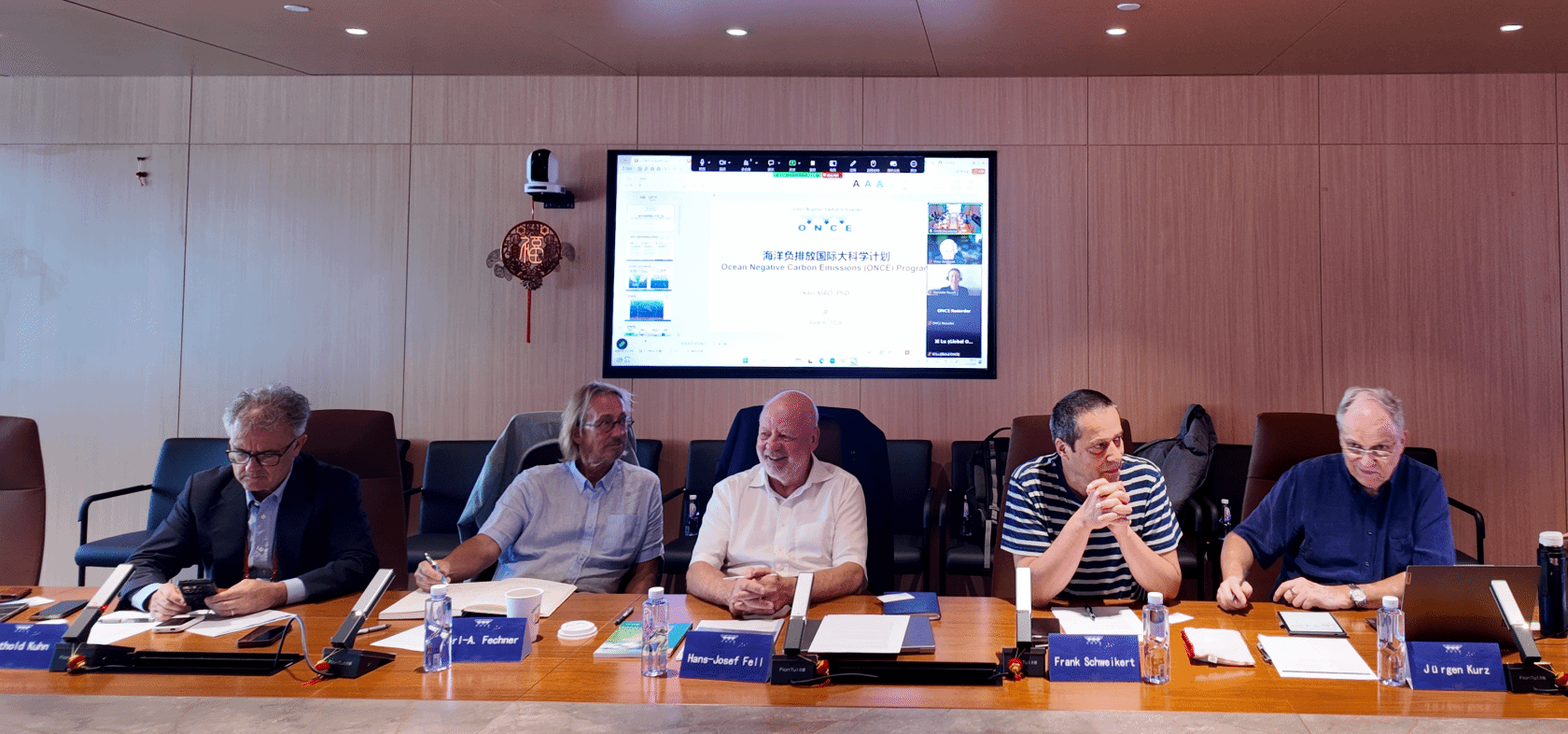
On industrial model innovation, German team members shared cutting-edge concepts such as artificial upwelling and macroalgae farming in subtropical ocean gyres, self-sufficient marine thermal energy, and resource-based management of marine ecological disasters. They emphasized that marine carbon sink industries must be market-driven, build sustainable industrial circular models, and reduce reliance on policy subsidies.
In the cooperation discussion session, the two sides also engaged in detailed consultations on multiple areas: innovating and upgrading multi-functional ocean farming models, jointly building a standardized assessment system for marine carbon sinks, carrying out international science communication cooperation, and clarifying a complete development pathway from theoretical research to industrial implementation, while aligning with diverse capital sources to ensure long-term project sustainability.
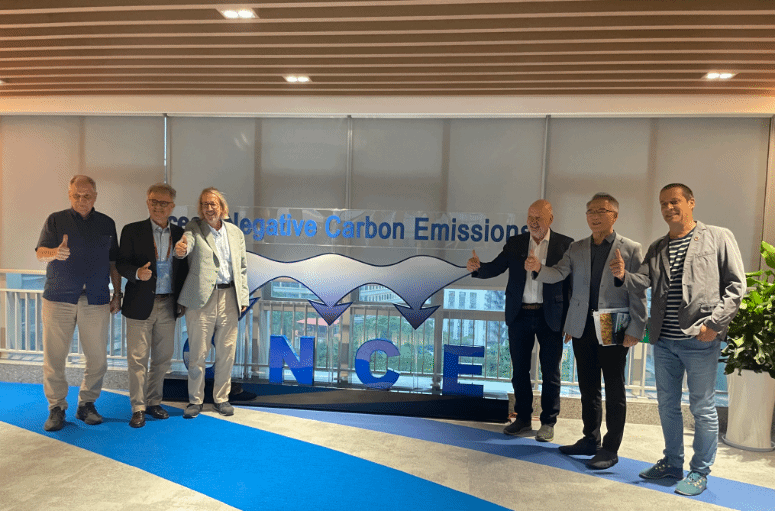
Phase II: Letter of Intent Signing – Opening a New Chapter in Sino-German Marine Cooperation
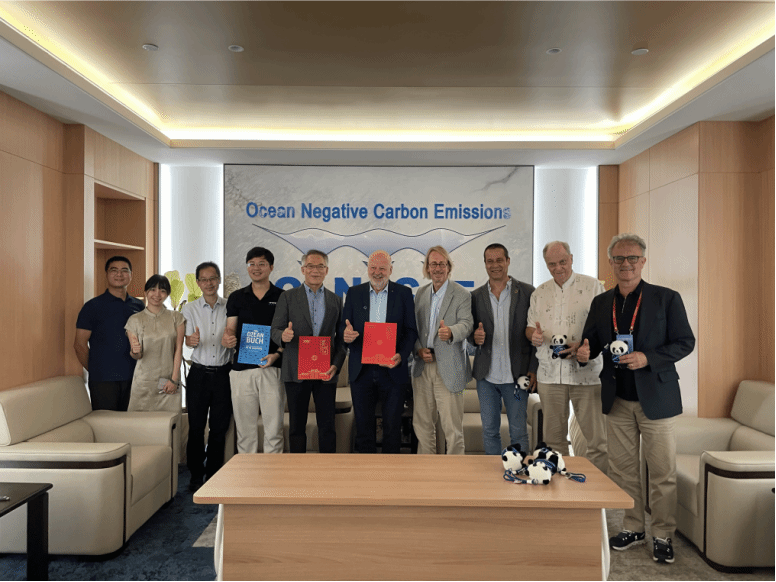
On June 7, the Global ONCE program and the German project team held a signing ceremony for the Letter of Intent (LOI). Representatives from both sides signed the Letter of Intent in the presence of attendees, formalizing their intent to cooperate in cooperate in open ocean macroalgae farming, carbon sequestration monitoring, and international standards research.
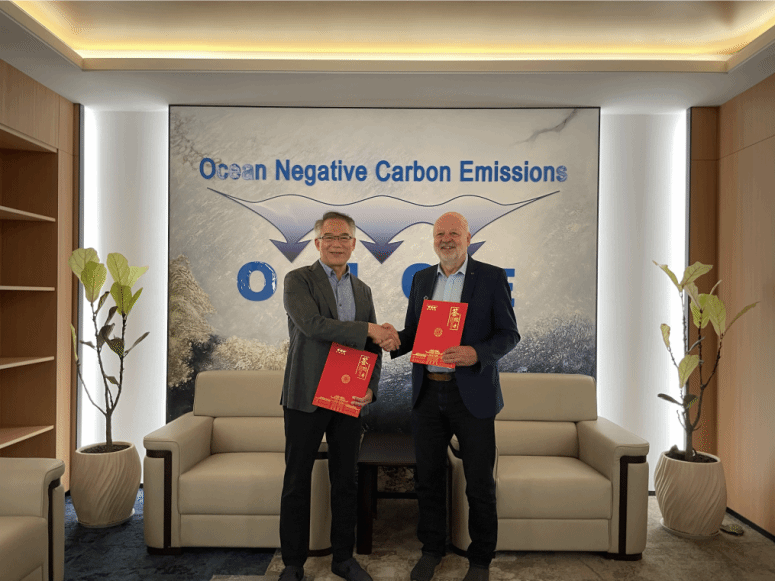
After the signing, the two sides exchanged souvenirs, conveying through cultural tokens their shared vision of protecting the ocean and jointly safeguarding the ecosystem.
Looking ahead: building a new global landscape for ocean negative carbon emissions
This consultation marks the shift of Sino-German ocean negative carbon emissions cooperation from academic exchange to tangible implementation. Going forward, both sides will leverage their respective strengths – integrating China’s achievements in carbon sink research, international standard setting, and demonstration projects with Germany’s experience in engineering technology and industrial transformation – to support global climate governance and the achievement of peak carbon and carbon neutrality goals through pragmatic cross-border cooperation, jointly building a new global landscape for ocean negative carbon emissions.